Pledge Your Eyes
PEDIATRIC EYE CARE

Pediatric Ophthalmology & Squint Treatment in Kolkata

Specialised Eye Care for Children at Every Stage of Development

Children's eyes are still developing, and problems with vision or eye alignment can sometimes go unnoticed.

Early detection and appropriate treatment can be important because vision develops during childhood. At Susrut Eye Foundation & Research Centre, our pediatric ophthalmology service provides specialised assessment and management for children and adolescents, including squint, lazy eye, refractive errors, pediatric cataract, congenital glaucoma and other childhood eye conditions.

Our approach combines child-friendly consultations, specialised diagnosis and treatment based on each child's age, condition and visual needs.

Child-Friendly Care Comfortable eye assessment
Vision Development Monitoring childhood vision
Squint & Eye Alignment Specialist evaluation
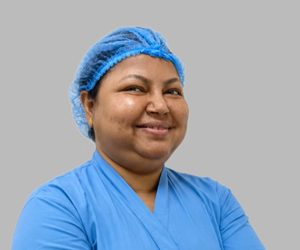
Dr. Ashmita Roy
MEDICALLY REVIEWED

Dr. Asmita
Roy

Pediatric Ophthalmology / Strabismus

Reviewed by a qualified ophthalmologist
REVIEWED BY Dr. Ashmita Roy
SPECIALITY Pediatric Ophthalmology / Strabismus
Reg. No. 77849 (WBMC)

This page provides general information about children's eye health. The appropriate diagnosis and treatment for a child can only be determined after a comprehensive eye examination by a qualified pediatric ophthalmologist.

CHILDREN'S EYE HEALTH

Why Is Children's Eye Care Important?

Good Vision Supports Learning and Development

Vision plays an important role in how children learn, read, interact with others and explore their surroundings. Children may not always realise or communicate that they cannot see clearly, so some vision problems can remain undetected.

Parents should pay attention to:
Sitting close to the television Holding books very close Frequent squinting Covering one eye Head tilting or turning Difficulty reading Difficulty seeing the board Blurred or double vision
PEDIATRIC EYE CONDITIONS

Childhood Eye Conditions We Treat

Specialist assessment and treatment for a range of eye conditions affecting children and adolescents.

01

Refractive Errors

Children can develop refractive errors that affect how clearly they see. Appropriate assessment and correction can help children see clearly.

Myopia Hyperopia Astigmatism
02

Amblyopia Lazy Eye

Amblyopia occurs when normal vision does not develop properly in one or both eyes during childhood. Early detection is important because treatment can become more challenging as the visual system matures.

Unequal Power Squint Early Detection
04

Pediatric Cataract

Cataract can occur in infants and children. Because clear vision is important during visual development, pediatric cataract requires specialist assessment and timely management.

Infants Children Specialist Care
05

Congenital / Pediatric Glaucoma

Glaucoma can occur in infancy and childhood. Pediatric glaucoma requires specialised assessment and, where appropriate, treatment and long-term follow-up.

Congenital Specialist Assessment Follow-up
06

Blocked Tear Ducts

Some babies and young children develop watering due to a blocked tear drainage system. Depending on the child's condition and age, treatment may include observation, probing or surgery.

Watering Observation Probing
07

Eye Allergies & Infections

Children can develop allergic or infectious eye conditions that cause redness, itching, watering, discharge or frequent eye rubbing.

Redness Itching Watering Discharge
08

Retinopathy of Prematurity ROP

ROP can affect some premature babies. Early screening and appropriate follow-up are important because severe ROP can threaten vision.

Premature Babies Screening Follow-up
SQUINT & STRABISMUS

Squint / Strabismus Treatment

What Is Squint?

A squint occurs when the two eyes do not point in the same direction at the same time.

The type and cause of strabismus determine the appropriate treatment.
Inward Esotropia
Outward Exotropia
Upward or Downward Vertical Deviation
SQUINT TREATMENT

Does Every Squint Need Surgery?

No.

The treatment of squint depends on why the eyes are misaligned, how large the deviation is and how it affects vision.

SURGICAL MANAGEMENT

Squint Surgery

When Is Squint Surgery Considered?

Some types of strabismus may require surgery to improve eye alignment.

Squint surgery involves adjusting the position or function of selected eye muscles to improve alignment. The decision is based on the child's individual clinical findings and visual needs.

Factors Considered
01 Type of squint
02 Angle of deviation
03 Age
04 Vision in each eye
05 Previous treatment
06 Presence of amblyopia
07 Overall eye health
AMBLYOPIA / LAZY EYE

Lazy Eye / Amblyopia

What Is Lazy Eye?

Amblyopia, commonly called lazy eye, occurs when vision does not develop normally during childhood.

The brain may gradually rely more heavily on the better-seeing eye and suppress information from the weaker eye.

Causes may include
01
Squint Misalignment of the eyes
02
Unequal Spectacle Power Different refractive power between the eyes
03
Significant Refractive Error Uncorrected focusing problems
04
Childhood Eye Conditions Certain conditions affecting visual development
AMBLYOPIA MANAGEMENT

How Is Lazy Eye Treated?

Treatment depends on the underlying cause and the child's individual visual needs.

01

Spectacles

Correcting refractive error may be an important first step in treating amblyopia.

02

Patching

The stronger eye may be covered for a prescribed period to encourage the weaker eye to work.

03

Atropine

In selected children, atropine drops may be used in the stronger eye to encourage use of the weaker eye.

04

Vision Therapy

Structured exercises, digital vision therapy tools and activities may be used to improve eye coordination, focusing and binocular vision.

05

Follow-up

Amblyopia treatment requires monitoring because the child's visual response can change over time.

Treatment is tailored to the child's age, cause of amblyopia and visual response.
PEDIATRIC VISION THERAPY

Making Eye Care More Engaging for Children

Vision therapy may be used as part of a child's eye-care programme when appropriate, with activities designed around the child's individual visual needs.

The programme focuses on:
Eye coordination
Focusing ability
Binocular vision
Brain-eye coordination
Visual skills

Important: Vision therapy may be recommended for selected children depending on the underlying visual condition and clinical assessment.

PEDIATRIC EYE ASSESSMENT

Children's Eye Examination

What Happens During a Pediatric Eye Check-Up?

The exact examination depends on the child's age and symptoms. A pediatric eye assessment may include several stages to understand the child's vision and overall eye health.

01

Medical History

Understanding the child's symptoms, birth history, family history and previous eye problems.

02

Vision Assessment

Determining how clearly the child can see.

03

Refraction

Checking whether spectacles are required.

04

Eye Alignment Assessment

Evaluating whether the eyes are properly aligned and how they work together.

05

Eye Movement Assessment

Checking how the eyes move and coordinate.

06

Eye Health Examination

Examining the structures of the eye for abnormalities.

07

Further Testing

Additional tests may be recommended depending on the child's age and clinical findings.

WHEN TO SEEK EYE CARE

When Should Your Child See a Pediatric Ophthalmologist?

Parents should consider an eye examination if they notice changes in their child's vision, eye alignment or visual behaviour.

Signs Parents Shouldn't Ignore

Children may not always recognise or communicate that they have a vision problem. Paying attention to changes in visual behaviour can help identify problems earlier.

One eye turning or drifting
Frequent squinting
Head tilting
Covering one eye
Difficulty reading
Sitting unusually close to screens
Headaches during visual tasks
Blurred or double vision
Poor visual performance at school
Persistent eye rubbing
Abnormal appearance of the eye
Excessive watering
Persistent or recurrent redness
For infants and premature babies

Children with certain risk factors may need earlier or specialised ophthalmic evaluation.

CHILDREN'S VISION

Does My Child Need Glasses?

Sometimes, Yes.

Children may need spectacles for refractive errors such as:

Myopia Hyperopia Astigmatism

Spectacles can also form part of treatment for some types of squint and amblyopia.

Important: Do not assume that a child will "outgrow" a vision problem. A pediatric eye examination can determine whether treatment is required.

CHILDHOOD MYOPIA

Myopia in Children

Childhood Myopia Needs Attention

Myopia is becoming an increasingly important childhood eye-health concern.

What Parents May Notice
Sitting close to the board or television
Holding books close
Squinting to see distant objects
Complaining that the board is blurry

If a child appears unable to see clearly at school, an eye examination is recommended.

RETINOPATHY OF PREMATURITY

Retinopathy of Prematurity

Eye Care for Premature Babies

Retinopathy of Prematurity can affect the developing retina of premature infants. Early screening is important in babies who are at risk.

PREMATURE BABY EYE CARE Early screening can help identify retinal changes in at-risk babies. ASK ABOUT ROP SCREENING
PEDIATRIC CATARACT

Pediatric Cataract

Cataract Can Occur in Children Too

Pediatric cataract is different from the typical age-related cataract seen in adults. Because visual development occurs during childhood, a child with a visually significant cataract requires timely specialist assessment.

SPECIALIST PEDIATRIC EYE CARE Timely assessment can help determine the appropriate care for a child's developing vision. CONSULT A PEDIATRIC EYE SPECIALIST
PEDIATRIC GLAUCOMA

Pediatric Glaucoma

Early Assessment Matters

Congenital or pediatric glaucoma can affect infants and children and requires specialised ophthalmic care.

SPECIALIST CHILDREN'S EYE CARE Early assessment is important when glaucoma is suspected in an infant or child. CONSULT A PEDIATRIC EYE SPECIALIST
WHY SUSRUT

Why Choose Susrut for Pediatric Eye Care?

Specialised children's eye care with experienced pediatric and squint specialists across Susrut's wider eye-care network.

01

Specialised Pediatric Eye Care

Susrut has a dedicated pediatric ophthalmology service covering childhood eye disorders and squint.

02

Pediatric & Squint Specialists

Susrut's pediatric directory includes doctors with specific pediatric ophthalmology and strabismus training.

03

Child-Focused Approach

The current service page highlights a kid-friendly environment and a gentle approach to children.

04

Comprehensive Eye-Care Network

Susrut operates an extensive network of Vision Centres, with primary assessment and referral to base hospitals when specialised care is required.

102+ Vision Centres
COMMUNITY EYE CARE

Pediatric Eye Screening Through Susrut's Community Network

Taking Children's Eye Care Beyond the Hospital

“A child's access to eye care should not depend on where they live.”

Through Susrut's wider community and Vision Centre network, children's eye problems can be identified closer to home, with appropriate referrals for specialist evaluation and treatment.

Community
Vision Centre
Specialist Care
OUR SPECIALISTS

Meet Our Pediatric Ophthalmology Specialists

Consult our ophthalmologists with expertise in pediatric eye care, squint evaluation, amblyopia management and childhood eye conditions.

Dr. Anwesha Manna

Dr. Anwesha Manna

Pediatric & Squint, Cataract & Cornea

Reg. No.: 67273 (WBMC)

Berhampore

Dr. Vrushali Shriram Deshpande

Dr. Vrushali Shriram Deshpande

Pediatric & Squint, Cataract & Cornea

Reg. No.: 77128 (WBMC)

Berhampore

Dr. Asmita Ray

Dr. Asmita Ray

Cataract & Cornea, Pediatric & Squint

Reg. No.: 77849 (WBMC)

Saltlake

Dr. Arpita Bagti

Dr. Arpita Bagti

Cataract & Cornea, Pediatric & Squint

Reg. No.: 73103 (WBMC)

Saltlake

Dr. Smita Ghosh

Dr. Smita Ghosh

Pediatric & Squint

Reg. No.: 65980 (WBMC)

Saltlake

Dr. Mohammed Yasser

Dr. Mohammed Yasser

Pediatric & Squint

Reg. No.: 88829 (WBMC)

Salt Lake, Rampurhat

COMMON QUESTIONS

Pediatric Ophthalmology FAQs

Answers to common questions about children's eye health, squint, lazy eye and pediatric eye conditions.

01 Does every child with a squint need surgery?

No. Treatment depends on the type and cause of the squint and may include spectacles, amblyopia treatment, exercises or surgery when appropriate.

02 Can spectacles correct a squint?

In some children, particularly where the squint is associated with refractive error such as hyperopia, appropriate spectacles can improve eye alignment.

03 Can a child outgrow a squint?

Parents should not assume that a squint will disappear without assessment. The cause and type of eye deviation should be evaluated by a pediatric ophthalmologist.

04 What is lazy eye?

Lazy eye, or amblyopia, is reduced visual development in one or both eyes during childhood.

05 Can lazy eye be treated?

Yes, treatment is possible, particularly when identified early. Depending on the cause, treatment may involve spectacles, patching, atropine or other approaches.

06 Does my child need an eye examination if they seem to see normally?

A child may not always recognise or report poor vision. Screening can identify problems that may otherwise go unnoticed.

07 When should a child have their eyes checked?

The timing depends on age, risk factors, symptoms and family history. Children with abnormal visual behaviour or eye alignment should be evaluated promptly.

08 What is ROP?

Retinopathy of Prematurity is a retinal condition that can affect some premature babies and may threaten vision if severe and untreated.

09 Can children have cataracts?

Yes. Cataracts can occur in children and require specialist assessment because clear vision is important during visual development.

10 Can children develop glaucoma?

Yes. Pediatric or congenital glaucoma can occur and requires specialised assessment and treatment.

EARLY EYE ASSESSMENT

Notice Something Different About Your Child's Eyes?

Don't wait for the problem to affect your child's learning or daily life. An early eye examination can help identify vision problems and determine whether treatment is needed.

PEDIATRIC EYE CARE AT SUSRUT

Give Your Child the Best Start to Healthy Vision

From squint and lazy eye to refractive errors, pediatric cataract, glaucoma and ROP, Susrut provides specialised eye care for children.

CALL SUSRUT 033 4050 6500