

- Home
- »
- Clinical Service
- »
- Glaucoma
Glaucoma
Protect Your Eyesight from the Silent Thief of Sight
Susrut Eye Foundation & Research Centre – One of the Leading Eyecare Centres in Eastern India
Glaucoma is one of the leading causes of irreversible blindness worldwide. Often called the “silent thief of sight”, it damages the optic nerve slowly and without warning. Most people don’t realize they have glaucoma until vision loss has already occurred.
The good news: with early diagnosis and proper glaucoma treatment, vision loss can be prevented.
What is Glaucoma?
Glaucoma is a group of eye diseases that cause optic nerve damage, usually due to increased eye pressure (intraocular pressure).
If left untreated, it can gradually lead to tunnel vision and even complete blindness.
Who is at Risk of Glaucoma?
You are at higher risk if you:
- Are over 40 years old
- Have a family history of glaucoma
- Suffer from diabetes, hypertension, or thyroid disorders
- Have had an eye injury or prolonged steroid use
- Have thin corneas or high intraocular pressure
If you fall into these categories, regular glaucoma screening is essential.
Symptoms of Glaucoma
In its early stages, glaucoma shows no symptoms. In later stages, patients may notice:
- Gradual loss of side (peripheral) vision
- Blurred vision
- Difficulty adjusting to dim light
- Halos around lights
- In acute glaucoma – sudden severe eye pain, headache, and vision loss
When to consider cataract surgery
Glaucoma Diagnosis at Susrut Eye Foundation & Research Centre
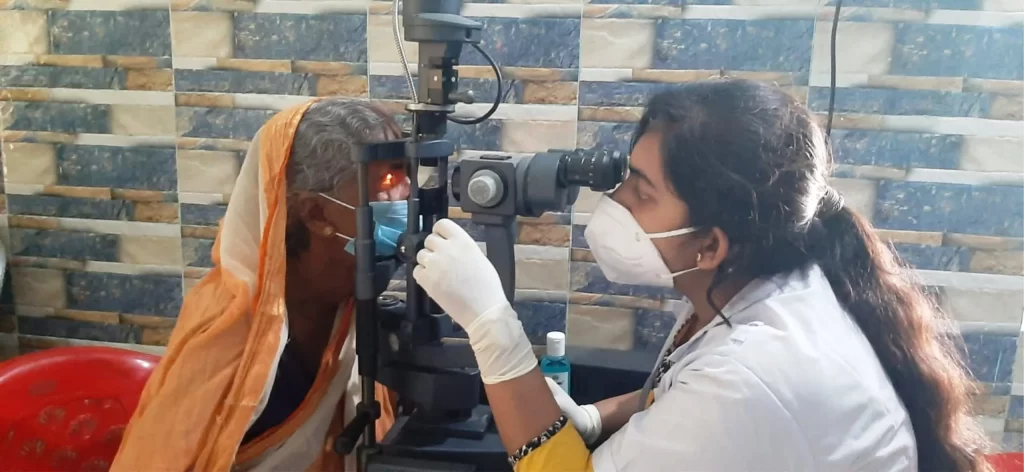
Our glaucoma specialists use advanced diagnostic tests for accurate detection:
- Tonometry – measures eye pressure
- Optical Coherence Tomography (OCT) – optic nerve imaging
- Visual Field Test – checks peripheral vision
- Gonioscopy – evaluates drainage angle
Glaucoma Treatment Options
Glaucoma cannot be cured, but it can be effectively controlled to prevent further vision loss. Treatment depends on the stage of the disease and may include:
- Glaucoma eye drops – to lower eye pressure
- Laser treatment for glaucoma – improves fluid drainage
- Minimally Invasive Glaucoma Surgery (MIGS) – advanced, safer surgical procedures
- Trabeculectomy or tube shunts – for advanced or uncontrolled cases
Our glaucoma specialists personalize treatment plans to ensure long-term eye pressure control and vision protection.
Why Choose Susrut Eye Foundation & Research Centre for Glaucoma Care
- Experienced glaucoma specialists
- Advanced diagnostic and laser technology
- Modern minimally invasive glaucoma surgery (MIGS)
- Compassionate, lifelong care and follow-up
At Susrut Eye Foundation & Research Centre, one of the leading eyecare centres in Eastern India, we are committed to early detection and advanced glaucoma management to preserve your eyesight for life.
Call us today to book your glaucoma screening and protect your vision before symptoms appear.

Treatments
Consult your eye doctor to see if surgery is the best course of action for you. When your cataracts start to hinder your quality of life, the majority of eye physicians advise you to think about having cataract surgery. Your capacity to carry out regular tasks, including reading or driving at night, may fall under this category.
Cataracts often do not cause visual impairments, thus most people do not feel a pressing need to have them removed. However, some people's cataracts can worsen more quickly than others. These consist of obesity, high blood pressure, and diabetes.

Precautions
Discuss if surgery is the best course of action for you with your eye doctor. When your quality of life starts to suffer due to cataracts, the majority of eye physicians advise you to think about having cataract surgery. This could involve your capacity to carry out regular tasks like reading or nighttime driving.
Because cataracts often don't damage the eyes, most people don't feel the need to have them removed right away. However, some people may see a rapid worsening of cataracts. Diabetes, hypertension, and obesity are a few of these.

Other Services

The most well-known eye condition is cataract, which is characterized..

A class of eye diseases known as glaucoma harms the..

The most well-known eye condition is cataract, which..

A dangerous ailment known as a corneal ulcer arises from a..

Millions of people worldwide suffer from strabismus, a common visual..

Refractive procedures are optional procedures meant..

Oculoplastic surgery is the corrective, reconstructive..

Low Vision Clinic – for correcting refractive error, so that patients..

The symptoms of uveitis, an inflammation of the uvea..

The diagnostic laboratory of Susrut provides hematology..

CAMP
Diabetic Retinopathys Screening Camp
Diabetic Retinopathy screening camps are often held in community vision centers because screening people for this disease requires special medical expertise. DR screening camps are specialized exclusively in the diagnosis and treatment of this disease. However, while the focus is on detecting diabetic retinopathy before it causes irreversible blindness (and this sometimes means detecting diabetes in patients who don’t know they have it), patients who suffer from other eye disorders will also be referred to our main hospital.
Before Surgery
How you prepare for Cataract Surgery
- Consultation: Make an appointment with a Susrut specialist for a thorough eye examination.
- Review of Medication: Talk about any medications you take that might have an impact on the process.
- Contact Lens Hiatus: As directed, stop wearing contact lenses to give your corneas time to revert to their normal form.
- Organize Transportation: Make plans for a driver to accompany you home after treatment.
- Avoid Eye cosmetics: The day before and the day of the treatment, avoid using any creams, cosmetics, or lotions near your eyes.
During the Surgery
How you prepare for Cataract Surgery
Because cataract surgery is a short (outpatient) procedure, you can return home in about an hour the same day. Typically, the entire process from admission to discharge from the hospital takes two to three hours.
After the Surgery
How you prepare for Cataract Surgery
- Only take the prescriptions as directed by a doctor, and abide by the guidelines. Don't take any more medications without first checking with the hospital.
- Notify your eye doctor right away if you experience any pain, light sensitivity, wetness, or redness in the operated eye.
- Don't skip the follow-up meeting.
Glaucoma FAQs
How does glaucoma cause vision loss?
Elevated intraocular pressure in the eye is the cause of glaucoma. The optic nerve is compressed by this intraocular pressure (IOP), which finally results in irreversible vision loss.
Why is glaucoma called ‘The Silent Thief of Sight’?
Because it frequently results in irreversible vision loss before the illness is even identified, glaucoma has earned the moniker “the silent thief of sight.” Glaucoma rarely exhibits signs in its early stages that would prompt you to visit your eye doctor due to vision abnormalities. This means that a significant percentage of vision loss has already happened by the time you visit your eye doctor.
What is ‘tunnel vision’?
If glaucoma is not adequately treated in its early stages, it can lead to a significant loss of peripheral vision, which is known as “tunnel vision.” Your field of vision is restricted to viewing only what is in front of you, or in your central vision, as tunnel vision obscures your “side vision.”
Will glaucoma affect all of my vision?
The first vision to be impacted is peripheral vision, which can lead to tunnel vision if not regulated at this point. The individual eventually experiences partial or whole irreversible visual loss as the condition worsens, affecting central vision next.
How common is glaucoma?
Worldwide, glaucoma affects about 70 million individuals. 12.3% of blindness worldwide is caused by glaucoma, one of the main causes of irreversible blindness. Up to 5% of persons over the age of 70 may have glaucoma, and the percentage rises to nearly 9% in those over the age of 80.